Sandpapergate Revisited: What Khawaja's Book and Bancroft Now Say
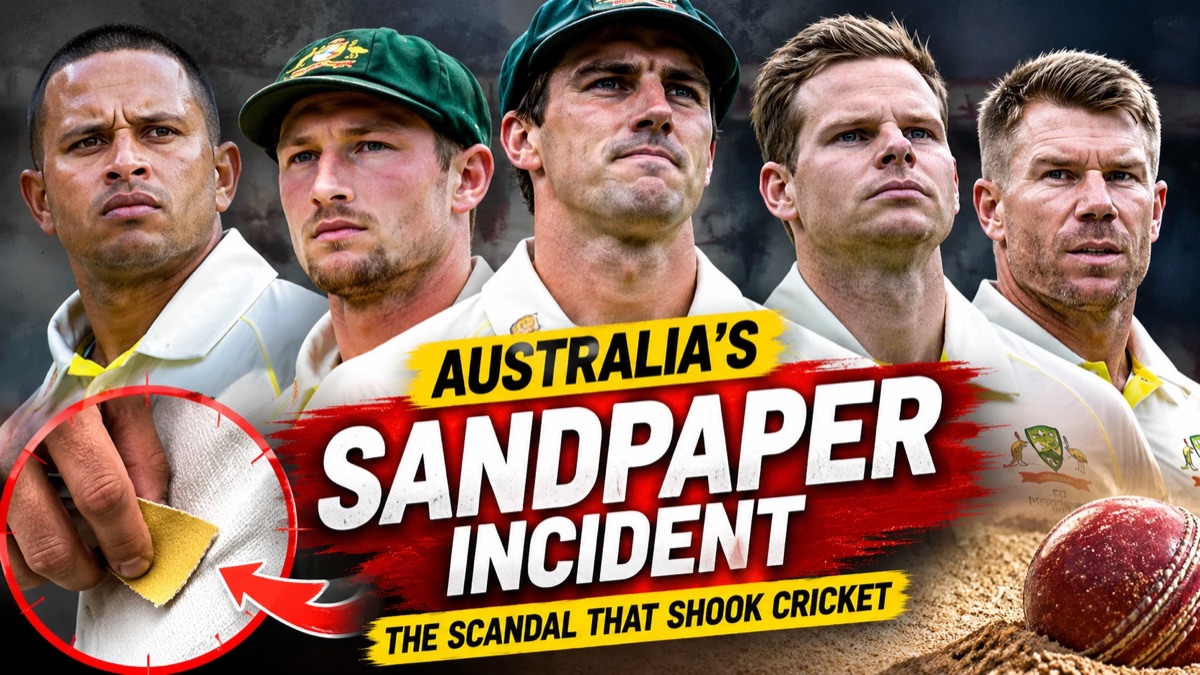
For eight years the official story of Cape Town 2018 was simple. Three men knew. Steve Smith, David Warner and Cameron Bancroft were banned, the coach walked, and Australian cricket spent years trying to put it behind them.
In November 2026 that story cracked. Usman Khawaja's autobiography, Sabr, says the whole team knew. A week later Bancroft himself wrote that he hadn't told investigators the full truth. Pat Cummins, now Australia's Test captain, called Khawaja's claims "utter nonsense".
Here's what happened in 2018, what's new, and what is still only one person's word against another's.
A note on sources. Everything below that comes from Khawaja's book, Bancroft's 2026 article or anyone else's recent comments is a claim, not an established fact, and is attributed to the person who made it. Several of the people named deny those claims. Where we say something is the official record, it comes from Cricket Australia's 2018 findings or published statements.
Cape Town, 24 March 2018
It was day three of the third Test at Newlands, with the series level at 1–1. South Africa were batting. Broadcast cameras picked up Bancroft rubbing the ball with something yellow, then tucking it down the front of his trousers when he realised he'd been spotted.
That evening Smith and Bancroft fronted the media. Smith admitted the "leadership group" had discussed trying to gain an advantage, and Bancroft said he had used yellow sticky tape with grit from the pitch. Within days that story changed: it was sandpaper.
The reaction in Australia was enormous. The Prime Minister weighed in, sponsors went quiet and fans who had grown up idolising the team felt betrayed.
The official findings
Cricket Australia's investigation, completed within days, found that only three players had prior knowledge of the plan:
- David Warner came up with the idea, told Bancroft to carry it out and showed him how. Banned for 12 months and barred from any future leadership role.
- Steve Smith knew of the plan and tried to hide what had happened. Banned for 12 months, stripped of the captaincy and unable to lead again for at least two years.
- Cameron Bancroft carried it out. Banned for nine months.
The investigation found that no other player, coach or member of staff knew. Coach Darren Lehmann was cleared, but resigned days later anyway, after an emotional press conference in which Smith broke down in tears.
Eight years of loose threads
The "three men" version never fully settled. In 2021 Bancroft was asked whether the bowlers knew and said the answer was "self-explanatory". Cummins, Josh Hazlewood, Mitchell Starc and Nathan Lyon responded with a joint statement saying they did not know a foreign substance had been taken onto the field until they saw the images on the big screen.
In October 2024 a Cricket Australia review panel lifted Warner's lifetime leadership ban, citing his "respectful and contrite" approach. It looked like the final chapter. It wasn't.
What Khawaja says in Sabr
Khawaja was in the Australian XI at Cape Town. In Sabr, released in November 2026, he writes about the scandal in a chapter titled "Sandpaper". According to the book and his interviews:
- The knowledge was collective. He deliberately writes "we" throughout the chapter and says the whole team should share responsibility.
- He was sitting next to Bancroft during the Test but says he was never interviewed by the investigation, which he describes as rushed.
- When the team discussed whether to "cop it as a team", he says two players disagreed. He doesn't name them.
- He says the bans given to the three players were not appropriate.
Khawaja has said he deliberately left names out of the book and that it has "never been a witch hunt" for him. Warner, a childhood friend, said publicly that Khawaja's account was accurate.
Cummins: "utter nonsense"
On 13 November Cummins called a press conference in Sydney and answered questions for more than an hour. He said that if Khawaja meant the team knew sandpaper was being taken onto the field, he was "100 per cent wrong", and that he personally did not know. He said parts of the book were probably defamatory but that he would not sue, adding that friends "aren't casual with each other's lives and reputations".
Starc said his position hadn't changed from the 2021 statement.
Bancroft breaks his silence
Five days later Bancroft published a long article in The West Australian, calling Cummins's press conference the "final straw". In it he says:
- He did not give Cricket Australia's investigators a complete and truthful account in 2018, and withheld details about when the sandpaper use started and who else was involved.
- Sandpaper was first used in the second Test at Port Elizabeth, not just at Cape Town, after Warner raised the idea in a wider team setting.
- He remembers conversations with the fast bowlers about the ball reversing, while accepting there is a difference between knowing a ball is reversing and knowing sandpaper was used.
- Of the original press conference, he says the sticky-tape version was "another lie".
Those are Bancroft's allegations. The bowlers have consistently denied knowing about the sandpaper, and some of the people Bancroft describes have rejected his account.
Where it stands now
Cricket Australia says it respects that Bancroft has told his story and that it will "take time to consider his comments". It has announced an independent forum where players from the 2018 tour can give their version of events, with its terms of reference still being finalised.
So, eight years on, there are now two incompatible stories. In one, three players acted alone. In the other, as Bancroft puts it, "we all knew". The forum may be the first time everyone in that dressing room is asked the same questions.
Why it still matters
Ball tampering is as old as cricket, and plenty of players around the world have been caught with mints, zips and bottle tops. What made Cape Town different was the planning, the cameras, and a team that had made a point of playing "hard but fair". Who knew, and who paid the price, goes to the heart of whether that punishment was fair.
For club cricketers, the lesson is the same one that Bancroft learned the hard way: there's always a camera now, even at your local ground.
Watch the documentary
We've made a short video documentary on the scandal and its revival. You'll find it on our videos page and YouTube channel.
Sources
- Cricket Australia, sanctions and investigation findings, 28–29 March 2018 (cricket.com.au)
- Cricket Australia, Warner leadership sanction review, 25 October 2024 (cricket.com.au)
- The Conversation, review of Sabr, 12 November 2026
- Sky Sports, Cummins press conference, 13 November 2026
- The Tribune / ANI, Khawaja interview, 10 November 2026
- Al Jazeera / Reuters, Bancroft article and Cricket Australia statement, 18 November 2026
- ABC News, Bancroft's account in full, 19 November 2026